Paid entrance to the territory of the city – "Golden Gate" to Astana
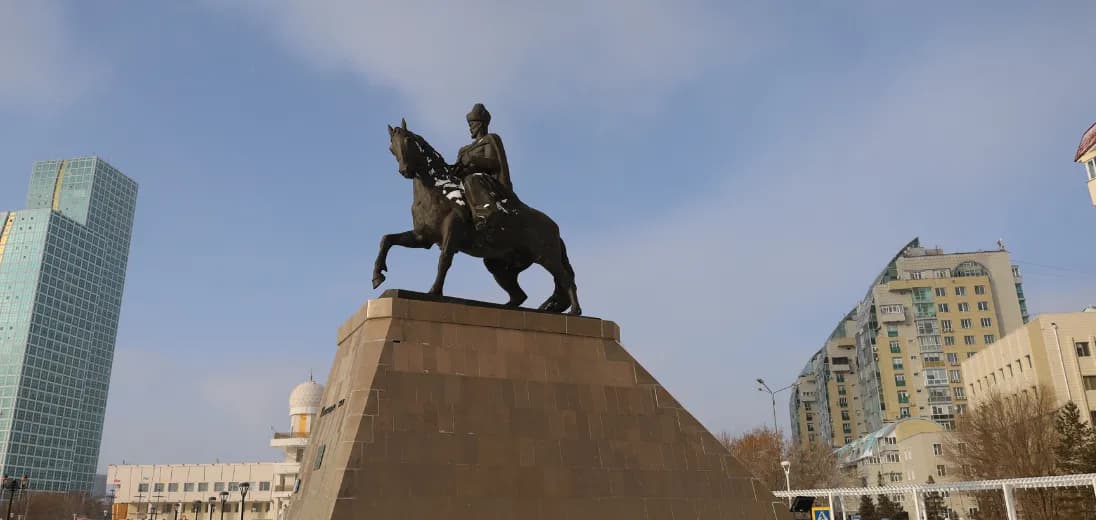
In a couple of years, the authorities plan to make entry into the territory of Kazakhstan's capital paid. What prompted this decision? Perhaps it is just another attempt to take money from ordinary citizens in a relatively legal way? Or is this measure simply forced, designed for certain benefits? What advantages can the "checkpoints" set up on the main roads of Kazakhstan's main city offer? Let's look into the matter in more detail.
A barrier or a detour? Or how best to enter Astana?
Paid entrances to the capital Astana are planned to start operating in 2020. It is not yet known what positive or negative aspects this novelty will bring and how it will affect car rental in Astana. Not all the details are known today, but there are plans for six paid entrances to Astana, located on the main arteries of the city's transport junction:
- Nurgisa Tlendiyev Avenue, towards Kostanay;
- Korgalzhyn Highway, towards Korgalzhyn;
- Ondiris Street, towards Kokshetau;
- Alash Highway, towards Pavlodar;
- Karkaraly Highway, towards Koshy;
- the Astana–Karaganda highway.
But! These are by no means all the roads leading to Astana. If you study the city map carefully, it becomes clear that loopholes for free entry still exist. These are small country roads that pass through the city limits and cross the above-mentioned routes at a sufficient distance from the capital. Is it advisable to use such loopholes? After all, if a driver does not want to pay for entering the city and decides to take a detour, he will have to drive a longer distance, making a considerable detour, and therefore spend more time and fuel. The cost of entry to Astana has not yet been determined. But it will probably be cheaper to pay for entry than to try to enter the city by a detour.
What goals or benefits does the akimat expect?
According to the Department of Transport and Development of Road and Transport Infrastructure, the introduction of paid entry to Astana will significantly reduce the load on the city's road network. After all, the number of cars driving in the capital at rush hour will fall by 30%. On the one hand, this figure is solid, but it is not clear how much it is in absolute terms. Within a 30-kilometer radius around Astana there are 42 settlements whose residents come to the capital every day for work. The daily road traffic amounts to about 75,000 cars that enter the city every morning and leave in the evening. Let's imagine that the system of paid entrances is already operating and the cost of one entry is 100 tenge. In just one working-day morning the treasury would immediately receive 7.5 million tenge. Per month, not counting days off, the amount would be about 187.5 million tenge. And what if the cost of entry is not 100 tenge but two or three times higher? The treasury would easily get richer by half a billion! That is quite a lot, without any effort. It is a kind of "golden gate" to the main city of Kazakhstan.
Help in searches and for debt collectors
But in this situation, injustice toward residents of settlements around Almaty is visible. Why must they pay every time to visit the capital, especially if they work here? Yet residents of the capital will not pay a penny to visit the settlements of the region. Maybe it would be logical to make leaving the city paid as well? Such a decision gives advantages in monitoring the movement of vehicles. Suppose paid entry systems are installed in other large Kazakhstani cities too. This approach would greatly simplify tracking the movement of each specific car. If a car is wanted, its location could be determined instantly. The system would immediately record that the car left Almaty, passed Astana, appeared in Karaganda, and so on. This makes investigative work more effective and much simpler. And if it is recorded that a car entered a particular city and did not leave, the circle of the search narrows significantly. Such a system would also be extremely useful in other important matters. For example, when a father does not pay his child the alimony assigned to him by the court, or pays a pitiful share of it, justifying himself by saying he has no income and pointing to his minimal official salary. Yet he is a very successful businessman who simply hides his income but leads a rich and interesting life, allowing himself to go out and visit entertainment venues and drive across the country in a nice car. Such a situation would be a weighty reason to seize the car of the debtor father. Finding him would not be difficult thanks to paid city entry systems. With proper authorization, it would be easy to take the car from him, even if the owner is not around. If the father does not promptly pay the entire amount of the debt, his vehicle will simply be sold at auction, and the alimony debt will be recovered from the proceeds. The same scheme can be used to find tax evaders and bank debtors, which would greatly simplify the work of debt collectors.
Go abroad, find out and ask
Creating a properly working paid entry system for Astana requires a great deal of serious legal, technical and socio-psychological work. After all, the main idea of the project is not to collect money from drivers but to get more citizens to give up personal transport. Kazakhstani officials say that, in developing this project, they took into account the successful experience of cities abroad such as Stockholm, London, Bologna, Singapore, Edinburgh and Milan. In Singapore, this measure restricting vehicle entry to the city was fantastically effective. The number of cars entering the city center in the morning fell by 76.3%. Yes, Singapore is undoubtedly a showcase city, but for many reasons not for Russians. In Stockholm, the situation on this issue is very instructive and right. The city center is not loaded with private transport at all. Being in the center of Stockholm in a private car is not a cheap pleasure. But before closing entry to the city center, the authorities did a colossal amount of work. 100 billion Swedish kronor (about 10 billion euros, or 4 trillion tenge) was invested in developing the capital's public transport. This sum equals Kazakhstan's annual budget for 2017. In addition, the Stockholm authorities held more than one local referendum to convince their compatriots of the benefits, importance and advantages of this innovative idea. The citizens did not agree at once, but later everyone was satisfied with the results. After the changes, Stockholm's public transport infrastructure can lay claim to the title of the best in the world. And that is so, because many alternatives to the private car are organized at a high level, from a vast network of metro stations to carriages operating as buses. In Stockholm, probably every penny allocated to the development of public transport infrastructure was spent as intended. It is still very early to dream of creating such a scheme in Astana. If even a tenth of what works in Stockholm today is introduced here, that would already be wonderful. The main point is simple: it is important that citizens know exactly and confidently when public transport arrives, and that its services are regular and sufficiently frequent (without crowding and crushing). Then people will not feel the urge to drive a private car every day. One of the important tasks the authorities will also have to solve is organizing parking near the city. After all, a large number of people come to the city every day. For example, around 250–300 cars enter Almaty daily, and 75 thousand enter Astana. So that people do not drive into the city center, officials need to provide parking areas (guarded and free) in sufficient numbers. Imagine a parking lot for 100–300 cars. It is not yet clear how such a project can be implemented. There should be no problems with space, since the steppes of Kazakhstan are boundless. The question of security will be open and problematic, because people will definitely not want to leave their car at the city entrance in an unguarded area, for example near the Kalkaman district or the Altyn-Orda market.
Pieces of the same puzzle
The idea of paid entry to large cities is good and promising in itself. But is any Kazakhstani city ready for such a step? Is the number of buses that meet modern standards of comfort and quality sufficient? The main task of the transport system of any large city is to ensure comfortable movement of people by public transport rather than by private cars. In addition to modernizing public transport and introducing restrictions for car owners, this issue should also be addressed by other methods. For example, you can develop car sharing, short-term car rental. Creating preferences for people who voluntarily cooperate for city trips would also be effective. In some countries there are privileges for cars in which all passenger seats are occupied: they are allowed to drive in the public transport lane. Perhaps it is time for us to adopt such privileged measures too? Otherwise brazen, crafty drivers drive in the public transport lane without any punishment. Try driving along Astana's main artery, Abay Street, at rush hour. Often the biggest traffic jams here are created precisely by such pushy drivers, not by the flow that follows the rules. This is poor work by the city executive bodies. Another solution could be to shift the center of attraction of the flow of cars. After all, a large flow of people heads for the city center because most of life is concentrated here: business, office and shopping-entertainment centers, companies, beauty and health salons, and much more. The situation with the influx of traffic would change if the city center were slightly freed from the excess of entertainment and jobs, redistributing them among outlying districts. For example, in Almaty the akimat could be moved to the younger and more promising Alatau district. Incentive measures would be effective for enterprises that voluntarily move their offices to remote districts, for example, by introducing tax breaks for them.