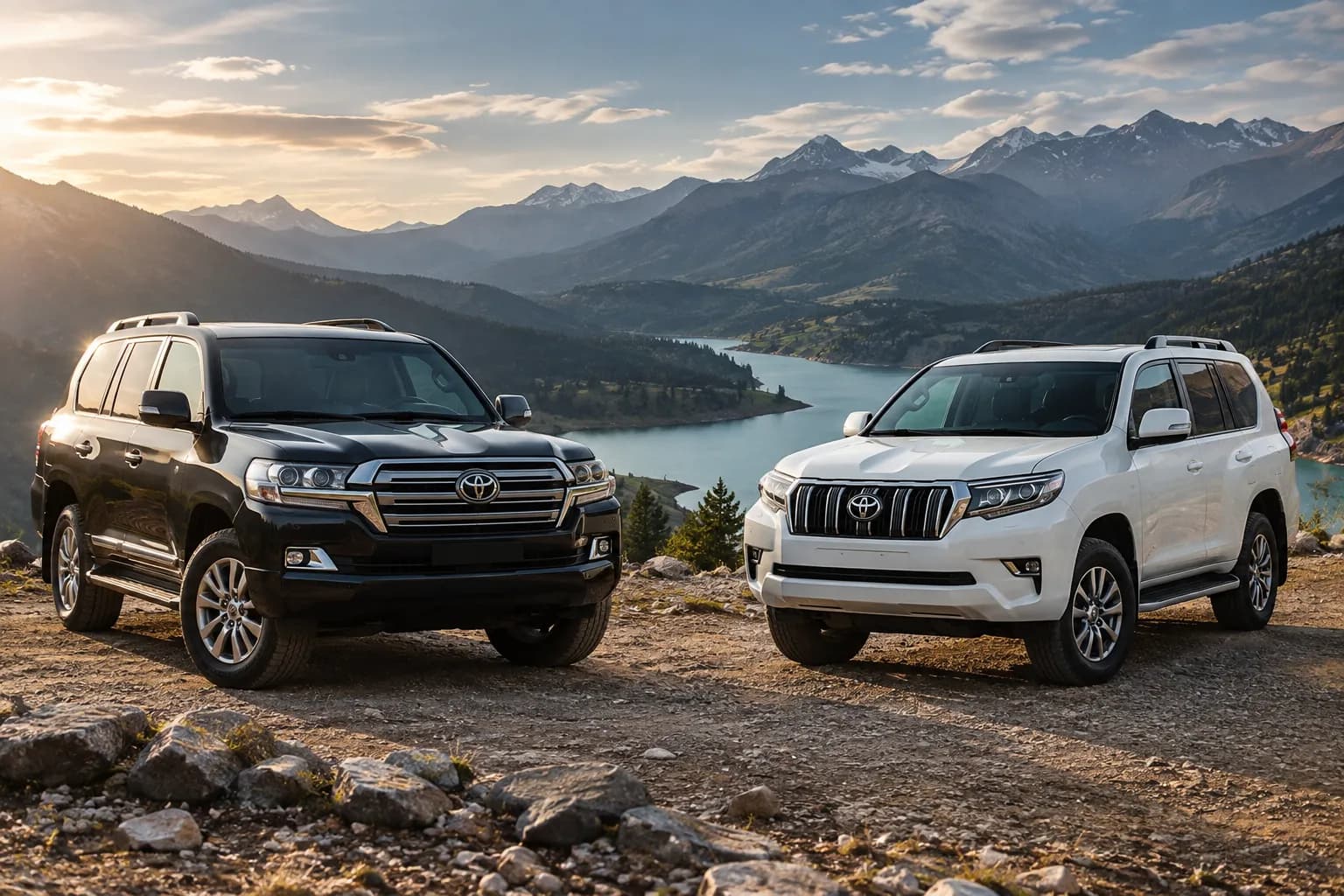
4WD Travel in Kazakhstan: When Do You Really Need Four-Wheel Drive?
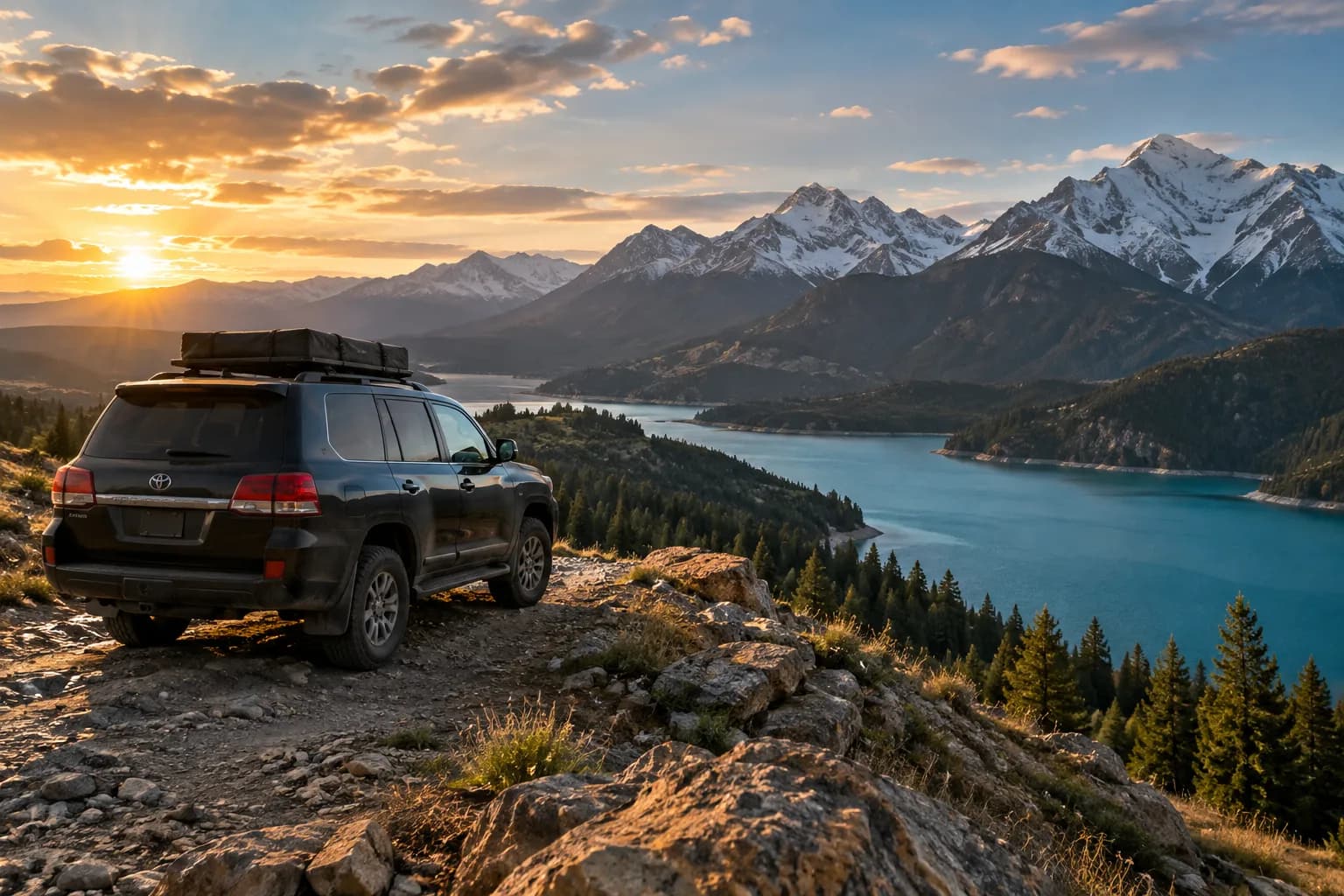
Kazakhstan is made for road trips. Vast open steppes, dramatic mountain valleys, alpine lakes, desert landscapes and the otherworldly scenery of Mangystau make driving one of the best ways to explore the country.
But there is something international visitors should understand before renting a car: road conditions can change dramatically during a single journey.
You may spend several hours driving on a good paved highway and then find that the final 20 or 30 kilometres to your destination involve gravel, deep ruts, rocks, sand or mud.
So, do you need a 4WD to travel around Kazakhstan?
Not necessarily. If your itinerary mainly connects major cities and popular destinations via paved highways, a regular car may be perfectly adequate. However, if you plan to explore mountain roads, remote lakes, the Mangystau region, steppe tracks or destinations away from paved roads, a high-clearance 4WD can make a significant difference.
Here is what foreign travellers should know before choosing a rental car for a road trip in Kazakhstan.
What Is 4WD and Why Is It Useful in Kazakhstan?
A 4WD, or four-wheel-drive vehicle, can deliver power to all four wheels. The exact system varies between vehicles, but from a traveller's perspective, the main advantage is better traction in difficult conditions.
Four-wheel drive can be particularly useful on:
- loose sand;
- muddy tracks;
- snow;
- rocky roads;
- steep climbs;
- deeply rutted dirt roads;
- slippery surfaces.
However, there is an important rule to remember:
4WD does not mean that a vehicle can go anywhere.
Ground clearance, tyres, vehicle weight, weather conditions and the driver's experience are just as important.
A capable 4WD driven carelessly can still become stuck or damaged. When travelling in remote parts of Kazakhstan, good preparation matters as much as the vehicle itself.
When You Don't Need a 4WD in Kazakhstan
You do not need an off-road vehicle for every road trip in Kazakhstan.
If you are travelling between major cities such as Almaty, Astana, Shymkent, Turkistan or Karaganda using the main highways, a standard car will often be sufficient.
The same applies to many popular attractions that have good paved access.
The important thing is to look beyond the first part of your route.
A navigation app might show that a destination is only 30 kilometres away, but those final kilometres can sometimes be the most challenging part of the entire journey. Asphalt may suddenly turn into gravel or dirt, and weather can make an otherwise manageable road considerably more difficult.
When choosing a rental car, therefore, base your decision on the most difficult section of your itinerary, not the easiest one.
Where Is a 4WD Useful in Kazakhstan?
Kazakhstan is the ninth-largest country in the world, and its landscapes range from high mountains to deserts and enormous areas of steppe.
As a result, driving conditions vary enormously.
Kaindy Lake and Mountain Roads
Kaindy Lake is one of the most unusual natural attractions near Almaty, famous for the trunks of submerged spruce trees rising from its turquoise water.
For international visitors, it is also a good example of why ground clearance matters in Kazakhstan.
The condition of the final approach can vary depending on the season and recent weather. Mud, rocks, ruts, snow and ice can make mountain roads significantly more challenging.
Before travelling to Kaindy or similar mountain destinations, check the latest road conditions locally rather than relying entirely on old travel reports or navigation apps.
A high-clearance SUV or 4WD provides considerably more flexibility when paved roads give way to rough mountain tracks.
Mangystau and the Ustyurt Plateau
If you are planning a road trip through Mangystau, choosing the right vehicle becomes even more important.
The region is home to some of Kazakhstan's most spectacular landscapes, including Bozzhyra, Tuzbair, Airakty, Torysh and the vast Ustyurt Plateau.
These places can feel like another planet.
They are also remote.
While some parts of a Mangystau itinerary involve paved roads, reaching more isolated attractions may require driving on dirt tracks, rocky surfaces or sand. Distances between settlements and services can also be substantial.
For this type of journey, a proper 4WD is strongly preferable.
The vehicle is only part of the preparation. Travellers should also think carefully about:
- fuel range;
- drinking water;
- offline navigation;
- mobile coverage;
- weather;
- emergency plans.
If you have little or no off-road driving experience, exploring very remote parts of Mangystau alone is not recommended. Travelling with another vehicle or an experienced local driver or guide can significantly reduce the risks associated with remote desert travel.
Steppe and Rural Dirt Roads
A dry steppe road can look surprisingly easy.
In good weather, some dirt tracks may be manageable even without four-wheel drive. After heavy rain, however, the same road can become muddy and deeply rutted.
This is one of the reasons road conditions in Kazakhstan should never be judged solely from photographs or old trip reports.
Weather can completely change the character of an unpaved road.
If your itinerary takes you far from towns and paved highways, having both 4WD and good ground clearance provides an additional safety margin.
Winter Driving in Kazakhstan
Kazakhstan can experience severe winter conditions, so a 4WD can also be useful for cold-season road trips.
Four-wheel drive can improve traction when accelerating on snow and other slippery surfaces. However, foreign visitors should not confuse better acceleration with better braking.
A 4WD helps you get moving, but it does not allow you to ignore the laws of physics.
Appropriate winter tyres, safe speeds and sufficient following distance remain essential.
If you are unfamiliar with winter driving, it is better to be conservative about long-distance travel during difficult weather conditions.
What Matters More: 4WD or Ground Clearance?
Ideally, you want both.
Ground clearance determines how easily the vehicle can pass over rocks, deep ruts and uneven surfaces without hitting the underside of the car.
Four-wheel drive helps when the tyres are struggling for traction.
On a dry but extremely rough road, ground clearance may actually be more useful than four-wheel drive. In deep mud, loose sand or on a slippery incline, 4WD becomes much more important.
For adventurous road trips around Kazakhstan, the most useful combination is therefore four-wheel drive, sufficient ground clearance and tyres suitable for the conditions.
Which 4WD Should You Choose for a Kazakhstan Road Trip?
The right vehicle depends on where you are going, how many people are travelling and how much luggage you have.
Here are four options worth considering.
Toyota Land Cruiser Prado: A Versatile Choice
The Toyota Land Cruiser Prado is a practical choice for travellers who want a balance between highway comfort and off-road capability.
It makes sense for mixed itineraries where you might drive several hundred kilometres on paved roads before continuing onto gravel or mountain tracks.
A Prado can be particularly suitable for:
- road trips around the Almaty region and Jetisu;
- mountain destinations;
- unpaved roads;
- long-distance drives;
- itineraries combining highways and moderate off-road sections.
For international visitors who want one vehicle capable of handling a variety of road conditions, the Prado is a versatile option.
Toyota Land Cruiser 200: Comfortable for Long Distances
Kazakhstan is enormous, and long driving days are common.
For an extended journey with several passengers and plenty of luggage, the Toyota Land Cruiser 200 is worth considering.
Its large cabin makes it particularly suitable for longer journeys where comfort matters. At the same time, its 4WD platform provides the capability needed when the itinerary moves beyond paved highways.
A Land Cruiser 200 can therefore be a good fit for travellers planning an extended multi-day road trip across different regions of Kazakhstan.
Haval H9: A Comfortable 4WD Alternative
The Haval H9 is another option for visitors looking for a large, comfortable 4WD.
It can work well for itineraries combining city driving, highways and unpaved tourist routes.
For travellers who value interior comfort but still want the flexibility of a 4WD vehicle, the H9 can be an interesting alternative.
As with any rental vehicle, its suitability for a particular off-road route should be confirmed with the rental company before departure.
Nissan Patrol: A Large SUV for Long Road Trips
The Nissan Patrol is worth considering when space and long-distance comfort are priorities.
Its large cabin is useful for groups, families and travellers carrying substantial luggage, while its 4WD configuration makes it suitable for itineraries extending beyond ordinary paved roads.
This can be particularly valuable in Kazakhstan, where travelling several hundred kilometres in a single day is not unusual.
Prado, Land Cruiser 200, Haval H9 or Nissan Patrol: Which One Should You Choose?
Rather than asking which SUV is "best," choose according to the type of trip you are planning.
The Toyota Land Cruiser Prado is a versatile option for a combination of highways, mountain roads and dirt tracks.
The Toyota Land Cruiser 200 offers more space and is particularly attractive for long-distance journeys with passengers and luggage.
The Haval H9 can suit travellers looking for a comfortable 4WD for a mixture of paved and unpaved roads.
The Nissan Patrol is another spacious option for long journeys where the capabilities of a large SUV are desirable.
Most importantly, tell the rental company where you intend to travel.
Do not assume that renting a 4WD automatically gives you permission to take it onto any off-road track. Rental agreements may have restrictions regarding particular roads, regions or types of terrain.
What to Check Before a 4WD Road Trip in Kazakhstan
Preparation becomes increasingly important as you travel farther from cities and major highways.
Check the tyres before departure, including their general condition and pressure. Make sure there is a usable spare wheel and that the necessary tools are present.
Fuel planning is especially important.
Distances in Kazakhstan can be deceptive, and filling stations may be widely spaced on remote routes. Do not wait until the fuel warning light appears before looking for the next petrol station.
Download offline maps before leaving populated areas. Mobile coverage can be unreliable or completely unavailable in remote mountain, steppe and desert regions.
Carry enough drinking water, particularly during summer and when travelling through Mangystau or other sparsely populated areas.
A sensible road-trip kit should also include a first-aid kit, flashlight, charging cables and a power bank.
Finally, check the weather and current road conditions shortly before departure. A dirt road that is easy to drive today may be a completely different challenge after heavy rain or snowfall.
Common 4WD Mistakes to Avoid
One of the biggest mistakes inexperienced travellers make is assuming that a 4WD cannot get stuck.
It can.
Deep mud, soft sand and badly rutted tracks can stop even a capable off-road vehicle. Rocks can damage tyres, and careless driving can cause problems with the suspension or underside of the vehicle.
Driving too fast on dirt roads is another common mistake.
A gravel road may appear smooth from a distance, but hidden potholes and sharp rocks can become serious hazards at speed.
Remote travel also requires more careful fuel planning than many international visitors are accustomed to.
Kazakhstan is a vast country. Always maintain a sensible reserve of fuel when travelling through sparsely populated regions.
Do You Need a 4WD in Kazakhstan? A Quick Guide
If your trip involves major cities and paved highways only, you probably do not need a 4WD.
If you plan to use dirt or gravel roads, a high-clearance vehicle becomes much more useful, while the need for 4WD depends on the road and weather conditions.
For mud, loose sand, snow, steep unpaved climbs or badly damaged remote roads, a proper 4WD is strongly preferable.
For remote parts of Mangystau and serious off-road routes, the vehicle alone is not enough. You also need careful preparation, appropriate equipment and sufficient driving experience.
Frequently Asked Questions About 4WD Travel in Kazakhstan
Do I Need a 4WD to Visit Charyn Canyon?
Not necessarily. The main tourist approach involves paved roads for much of the journey. However, if you plan to explore less-developed tracks or alternative areas, road conditions can vary. Check your exact route before departure rather than assuming that every road around Charyn is suitable for a standard car.
Can I Drive to Kaindy Lake in a Regular Car?
Road conditions on the final approach can vary significantly by season and weather. A high-clearance vehicle is often the safer choice, particularly when conditions are muddy, snowy or heavily rutted. Check current local conditions before setting out.
What Is the Best Type of Rental Car for a Kazakhstan Road Trip?
For a straightforward city-and-highway itinerary, a normal car may be sufficient. For a mixed road trip involving mountains and unpaved roads, a high-clearance SUV or 4WD is a better choice. More demanding and remote itineraries call for a capable 4WD and more extensive preparation.
Prado or Land Cruiser 200 for Kazakhstan?
A Prado is a versatile option for travellers combining highways, mountain roads and moderate dirt tracks. A Land Cruiser 200 provides additional space and can be particularly attractive for longer journeys with several passengers and substantial luggage.
Do I Need 4WD in Kazakhstan During Winter?
Four-wheel drive can provide better traction on snow, but good winter tyres remain essential. A 4WD does not automatically stop faster on snow or ice, so driving speed and following distance must be adjusted to the conditions.
Is the Nissan Patrol Suitable for Long-Distance Travel?
Yes. The Nissan Patrol's large SUV format and spacious interior make it suitable for long-distance road trips, particularly for groups or travellers carrying significant luggage. Fuel consumption and fuel availability should be considered when planning remote routes.
Is the Haval H9 Suitable for a Kazakhstan Road Trip?
The Haval H9 can be suitable for itineraries combining paved roads with unpaved sections. For difficult off-road routes, check the specific conditions and confirm with the rental company that the intended route is permitted.
When Should You Rent a 4WD in Kazakhstan?
You do not need four-wheel drive simply because you are travelling in Kazakhstan.
For a conventional itinerary connecting major cities and attractions via paved highways, a standard rental car can often do the job.
The equation changes when your plans include mountain tracks, remote dirt roads, mud, sand, snow or the wilderness of Mangystau.
A useful rule for international travellers is simple:
Choose your rental car based on the most difficult part of your itinerary, not the first kilometres of smooth highway.
For a versatile road trip, the Toyota Land Cruiser Prado and Haval H9 are worth considering. Travellers looking for a larger SUV for long-distance journeys with passengers and luggage can consider the Toyota Land Cruiser 200 or Nissan Patrol.
Whichever vehicle you choose, remember that 4WD is only one part of safe travel in Kazakhstan. Check the weather, road conditions and fuel availability, download offline maps, carry sufficient water and make sure your rental agreement allows you to drive the route you have planned.
With the right vehicle and sensible preparation, a self-drive journey can be one of the most memorable ways to discover Kazakhstan.